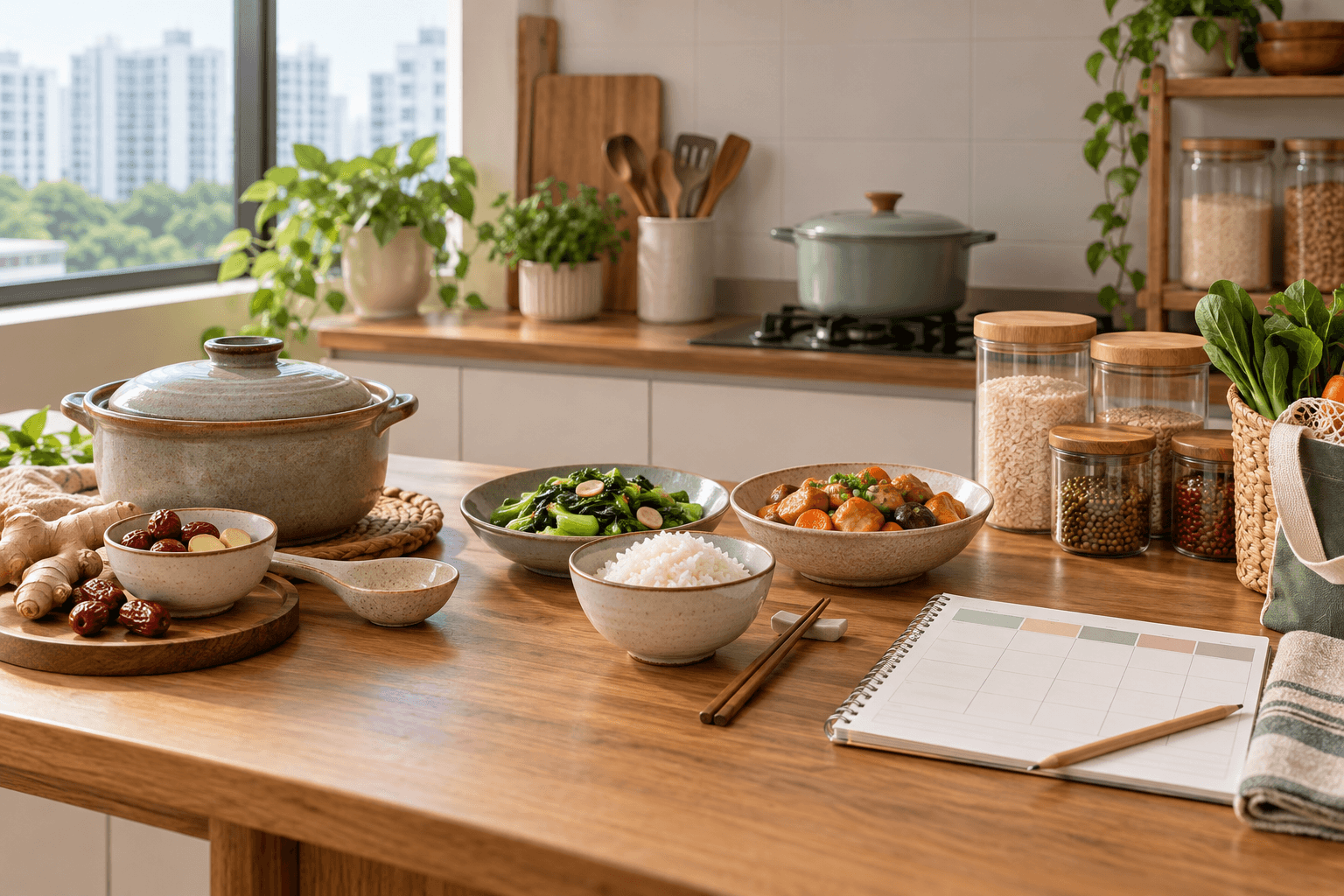
A confinement nanny should cook the meals you both agreed she would cook. That may mean confinement meals for the recovering mother only, simple extra portions for a partner, or a wider family menu. None of those arrangements should be assumed.
The useful question is not whether “cooking is included.” It is whose food, how often, how many separate dishes, and what happens when the household changes.
Start With The Mother's Meals
Define the mother's food first. This is the part most closely connected to the purpose of confinement support.
Agree on:
- breakfast, lunch, dinner, and snacks
- soups, teas, or other drinks
- portion size and preferred meal times
- foods the mother likes, dislikes, or cannot eat
- whether leftovers can be reheated
- how often the menu should repeat
- who decides when an ingredient is substituted
Do not reduce this conversation to a list of traditional dishes. A mother may want lighter food, more vegetables, less oil, no rice wine, or meals that follow advice from her healthcare professional. The nanny may have a familiar cooking style, but the person recovering is the person eating.
Singapore's HealthHub advises nursing mothers to make balanced food choices across fruit, vegetables, grains, protein foods, and dairy. Its postpartum nutrition guide also notes that many confinement practices come from tradition and that herbal products or supplements should be discussed with a healthcare professional. Use the family's medical and dietary instructions as requirements, not topics for a household debate.
Count Diners, Not Relationships
“Cook for the family” is too vague to price or plan.
One extra bowl of soup for a partner is different from lunch and dinner for two grandparents, a partner, an older child, and a domestic helper. The work changes again if those people need separate dishes.
Write down every regular diner:
| Person | Which meals | Same food as mother | Separate requirement |
|---|---|---|---|
| Mother | Breakfast, lunch, dinner | Main plan | Dietary and recovery preferences |
| Partner | Dinner | Sometimes | Non-confinement option |
| Older child | Lunch, dinner | No | Mild food, familiar staples |
| Grandparent | Lunch | Sometimes | Lower salt or other preference |
The table is not a demand. It is a workload picture. Show it during the interview and ask what the nanny is comfortable taking on.
MOM describes confinement nanny services as private arrangements that are “decentralised, varied and highly personalised” because household needs differ. Its written answer on confinement nanny arrangements is a useful reminder that a standard label does not create a standard cooking scope.
Separate Extra Portions From Extra Menus
Ask two different questions.
First: can the nanny make a larger quantity of the mother's dish for another adult?
Second: can she prepare a separate family dish?
The second request takes more planning, preparation, stove space, cleanup, and attention. A partner who dislikes confinement food may need a simple alternative. A toddler may need an early meal with a different texture. A grandparent may expect several dishes served together.
If you need separate menus, list them before booking. Do not wait until the nanny arrives and say, “Just cook something simple.” Simple is subjective, and several simple requests can fill the kitchen day.
The guide on hiring a confinement nanny when you have a toddler explains why an older child's routine needs its own plan rather than being folded quietly into newborn care.
Decide What Gives Way When The Day Is Busy
Cooking does not happen in isolation. The nanny may also be settling the baby, washing feeding equipment, supporting feeds, preparing the mother's bath or drinks, and trying to rest after night care.
Agree on the priority when several needs collide.
For example:
- Immediate baby and mother needs come first.
- The mother's next meal is prepared.
- Family food is simplified, delayed, or handled by someone else.
That order may differ in your home. The important part is choosing it before a difficult day.
A full family menu can be reasonable if the nanny agrees and the rest of her scope leaves enough time. It becomes a problem when the family treats it as invisible work and still expects every other task to happen on the same schedule.
Put Dietary Limits In Writing
Collect the information before the nanny plans a menu:
- allergies and intolerances
- religious food requirements
- healthcare instructions
- vegetarian or other dietary patterns
- alcohol in cooking
- ingredients the household does not keep
- separate utensils or preparation areas, if needed
- food preferences that are optional rather than essential
Label the difference between a medical requirement, a firm household rule, and a preference. That helps the nanny know what cannot be substituted.
Do not ask the nanny to interpret a diagnosis or decide whether a supplement is suitable. Where health guidance conflicts with tradition or family advice, return to the mother's healthcare professional.
Assign The Grocery Work
“Groceries provided” still leaves several jobs unassigned.
Confirm who will:
- draft the weekly menu
- prepare the shopping list
- buy fresh ingredients
- source herbs and specialty items
- check what is already in the kitchen
- approve brands and substitutions
- pay and keep receipts
- handle urgent top-ups
Some families order groceries online. Others ask a partner, grandparent, or helper to shop. A nanny may be willing to go to the market, but that time comes from somewhere else in the day. Ask rather than assume.
Set a simple expense route. A shared note with the purchase, amount, date, and receipt is usually enough. The guide to documenting the confinement month includes a lightweight way to track expenses and changes.
Define Kitchen Work Around The Cooking
Cooking scope also includes the work before and after the meal.
Discuss:
- washing and cutting ingredients
- storing herbs, raw food, and leftovers
- washing pots, knives, and preparation surfaces
- cleaning the stove and sink after cooking
- clearing family plates
- washing dishes unrelated to meals the nanny prepared
- managing rubbish and food waste
- sharing the kitchen with a grandparent or helper
A nanny who agrees to clean the area she used has not necessarily agreed to reset the entire kitchen after the household eats. Write the boundary plainly.
Kitchen authority matters too. If a parent-in-law and nanny both want to control ingredients or timing, decide who leads the mother's menu and how changes are raised. The issue is often not culinary skill. It is two people believing they own the same task.
Plan For Visitors And Weekends
The number of diners can expand without anyone noticing.
A relative visits at lunchtime. A partner works from home. Grandparents stay for the weekend. Someone asks whether the nanny can “add one more portion.” By the end of the week, the original two-person arrangement has become a household catering plan.
Agree that visitor meals require advance confirmation. Set a practical limit, such as extra portions only when the same dish is suitable, or no visitor cooking at all. Decide who arranges takeaway when the limit is reached.
Also cover celebration meals, full-month gatherings, and the nanny's own meals. She needs to know what food she may use, whether she cooks for herself, and when she can eat.
Test The Scope During The Interview
Give the candidate a realistic day instead of asking, “Can you cook?”
Try:
The mother needs three meals. My partner eats dinner, our toddler eats at 6pm, and my mother visits for lunch twice a week. Which parts can you handle, and what would you simplify?
Then ask:
- Which dishes can share ingredients?
- How many separate menus are realistic?
- What do you prefer not to cook?
- What happens after a difficult night?
- Who should shop and how much notice do you need?
- Does the wider scope change your fee?
Listen for limits as carefully as capability. A clear “I can cook for the mother and make one larger dinner, but not prepare a separate toddler menu” is more useful than a broad yes.
The questions families often miss can help with the rest of the fit conversation.
Write A One-Page Meal Scope
Before paying a deposit, record:
- regular diners and meal days
- mother's meal frequency
- extra portions versus separate dishes
- allergies, dietary requirements, and firm exclusions
- grocery planner, buyer, payer, and expense record
- herbs or specialty ingredients
- kitchen cleanup boundary
- visitor and weekend meals
- nanny's own food arrangement
- priority when care and cooking conflict
- any additional fee and how changes are approved
Attach this to the wider direct agreement checklist. Review it again shortly before the start date, especially if a grandparent, helper, or older child will now be at home more often than expected.
How BulanBloom Thinks About This
BulanBloom treats cooking scope as a fit question, not a hidden test of generosity. A nanny who is excellent at focused mother-and-baby support may be the wrong match for a household that needs several family meals. Another may enjoy broader cooking but need fewer separate care tasks.
Clarity protects the working relationship. Count the people, name the meals, separate extra portions from extra menus, and decide what happens on the hardest day.
BulanBloom is a platform, not an employment agency. Families and nannies contract directly with each other, and BulanBloom is not a party to that agreement. This article is general information for Singapore families, not legal or medical advice.
Common questions
Does a confinement nanny normally cook for the whole family?
There is no universal scope. A nanny may cook primarily for the recovering mother, include simple portions for a partner, or agree to meals for more family members. Confirm the number of people, meals, dishes, and exclusions before booking instead of treating whole-family cooking as automatic.
Should family meals cost extra?
Extra cooking may change the workload, grocery volume, and time available for mother-and-baby care. Ask the nanny whether additional diners or separate dishes affect her fee, and record any agreed amount before the engagement rather than negotiating it after arrival.
Who should buy confinement groceries?
Agree who plans the menu, writes the list, buys ordinary groceries, sources herbs, pays, and approves substitutions. Keep receipts or a shared expense record, and decide how urgent top-up purchases will be handled.
What cooking details belong in the agreement?
Record who receives meals, approximate meal frequency, separate dietary needs, ingredients the nanny will not handle, grocery responsibilities, kitchen cleanup, visitor meals, leftovers, and the process for changing the plan.
Find care matched to your household.
A four-minute private quiz organises your recovery, feeding and household preferences so we can compare suitable profiles.
Start the quiz